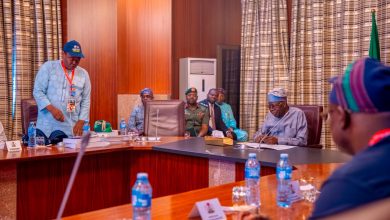
An epoch making royal visit goes into the history book today at Igbotako Osooro as Ikale Royal fathers jointly paid a congratulatory visit to the winner of All Progressives Congress, APC Ondo South Senatorial District primaries and billionaire business mogul, Barr Jimoh Ibrahim, CFR, PhD.

The royal visit by six prominent Ikale monarchs was led by the Chairman Council of Obas in Okitipupa Local Govt, His Royal Majesty, Oba Michael Obatuga Adetoye, the Jegun of Idepe Okitipupa.

Jegun of Idepe, Oba Obatuga Adetoye in his address noted that Ondo South is blessed with the right choice of candidate who will not only represent Ondo South well at the Red Chamber but will be a blessing to his kit and kin across Ondo South at the upper chamber of The National Assembly.

He noted that their royal prayers were with him during the primaries with the hope that among the plethora of candidates, the delegates will discern the brand of true legislative representation which Jimoh Ibrahim stands for, noting that on the long run the Ondo South APC Delegates saw the light which Araba of Ikale represented and chose him over and above the other aspirants.

While Congratulating him over his success at the APC primary, Oba Adetoye said Ibrahim is a son that the royal fathers are proud for and a political representative they can boldly vouch for at all times.
Dr Jimoh Ibrahim in his reaction noted that a community without reliable royal fathers will simply perish, adding that Yoruba monarchs are known for spiritual, moral and royal guidance.
Ibrahim, while thanking the Ikale monarchs for their congratulatory visit promised not to let them down when the good people of Ondo South finally return him as their Senate elect come 2023 General election.